


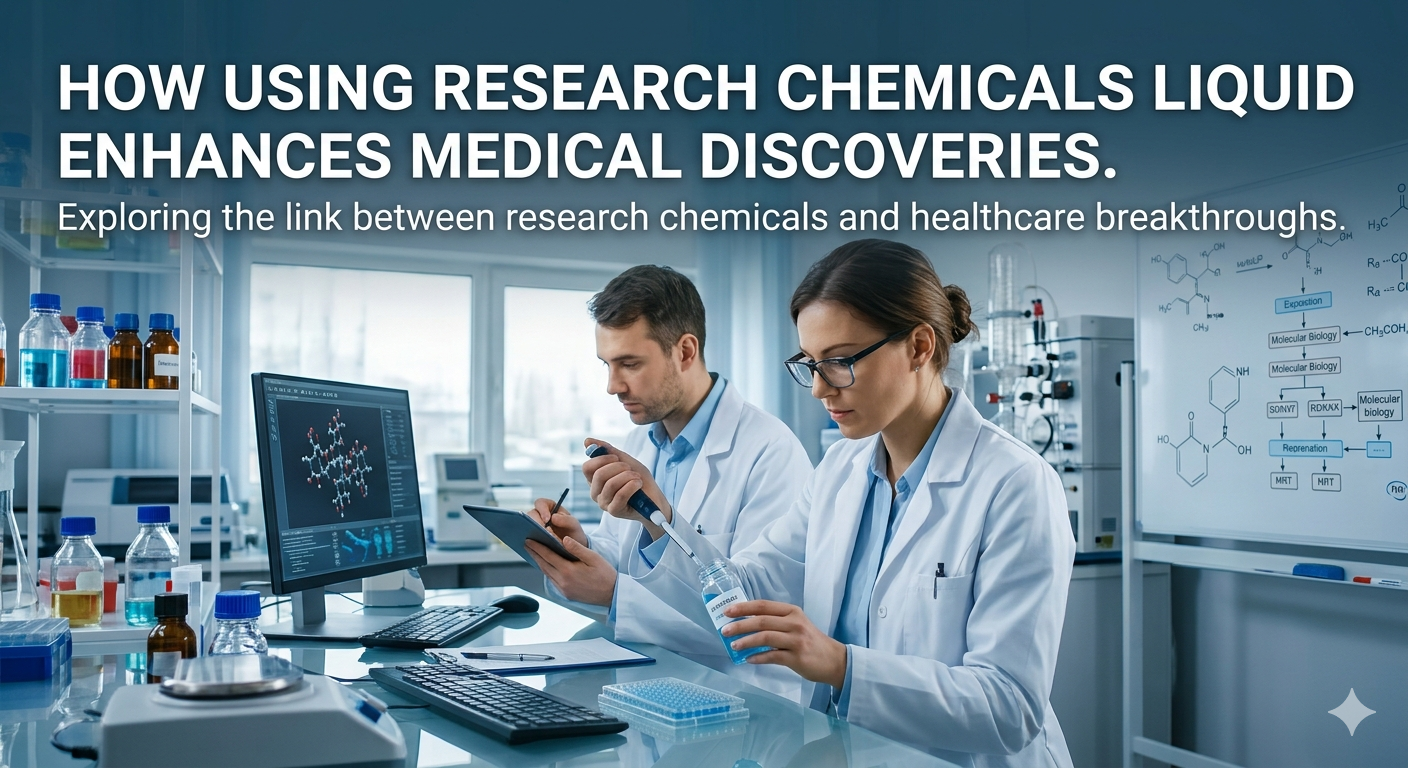
Researchers constantly seek innovative ways to accelerate medical breakthroughs. The use of research chemicals, particularly in liquid form, has emerged as a significant contributor to advancements in the healthcare industry. These substances are pivotal in developing new drugs and treatments, providing a foundation for substantial progress in medical science.
In this article, we explore how liquid research chemicals are transforming medical discoveries. We will delve into their role in drug development, innovations in treatments, and the ethical considerations that accompany their use. Below, uncover the details of these crucial components of modern medical research.
Understanding the Role of Research Chemicals


Research chemicals in liquid form are vital to modern medical investigations. They provide a flexible and effective means for scientists to experiment and innovate. These substances are carefully used to study biological effects and interactions that can lead to groundbreaking findings.
Such chemicals are utilized in numerous experiments designed to understand cellular interactions and disease mechanisms. By simulating complex biological environments, researchers can obtain detailed insights into health-related issues. Consequently, this knowledge supports the creation of targeted therapies for various ailments.
Those engaged in research must ensure the sourcing of high-quality chemicals to maintain data integrity. Examining crucial factors such as purity and concentration can significantly affect research outcomes. Selecting reputable suppliers like research chemicals liquid is fundamental to achieving reliable results.
Impact on Drug Development and Testing
Research chemicals liquids significantly influence drug development and testing processes. They enable quick adaptation and imitation of organic processes essential for creating new pharmaceuticals. By fostering a controlled environment, these liquids allow extensive testing before clinical trials.
Data indicate that utilizing research chemicals in this context speeds up initial testing phases by roughly 20%. This acceleration means potential treatments can proceed to clinical trial phases faster, enhancing overall drug development timelines. Given the competitive nature of pharmaceuticals, this efficiency is especially beneficial.
Sustaining ethical standards in drug testing mandates transparent reporting and analysis. Pharmaceutical regulations require rigorous documentation of every experiment conducted. Researchers should prioritize these principles to secure trust and credibility in the field.
Innovations in Medical Treatments Through Liquids
Liquid research chemicals are at the forefront of cutting-edge treatment innovations. Their use is instrumental in developing therapies for cancer, neurological disorders, and chronic diseases. These compounds allow detailed examination of how treatments can be optimized for effectiveness.
Studies reveal significant progress in oncology therapy development using these substances. By creating tailored environments, researchers can identify potential treatment paths more precisely and effectively. This targeted approach has already shown successful trial outcomes globally, offering hope for more responsive treatments.
To sustain the momentum, scientists are encouraged to share findings through peer-reviewed journals. Medical research sharing platforms facilitate collaboration, which is crucial for innovative treatments’ advancement. Such partnerships enhance resource sharing and collective knowledge expansion.
Safety and Ethical Considerations in Research

The use of liquid research chemicals in experiments must adhere to strict safety and ethical protocols. Researchers face challenges ensuring these substances are handled and disposed of properly to prevent health hazards. Addressing these concerns is a priority within the scientific community.
Comprehensive regulatory frameworks guide the ethical use of these chemicals. Institutions engage with oversight bodies to ensure protocols are followed, protecting both researchers and the wider public. This structured governance plays a critical role in maintaining the credibility of scientific endeavors.
Implementing best practices for safety includes regular training sessions and thorough documentation of all experimental procedures. Conducting risk assessments for each use case is necessary to align with industry standards, ensuring protective measures are enforced throughout the research lifecycle.
In conclusion, research chemicals liquids have revolutionized the landscape of medical discovery. From expediting drug development to enabling innovative medical treatments, these compounds are indispensable. Prioritizing safety and ethics will ensure their continued positive impact on global healthcare advancements.